THE COURTYARD
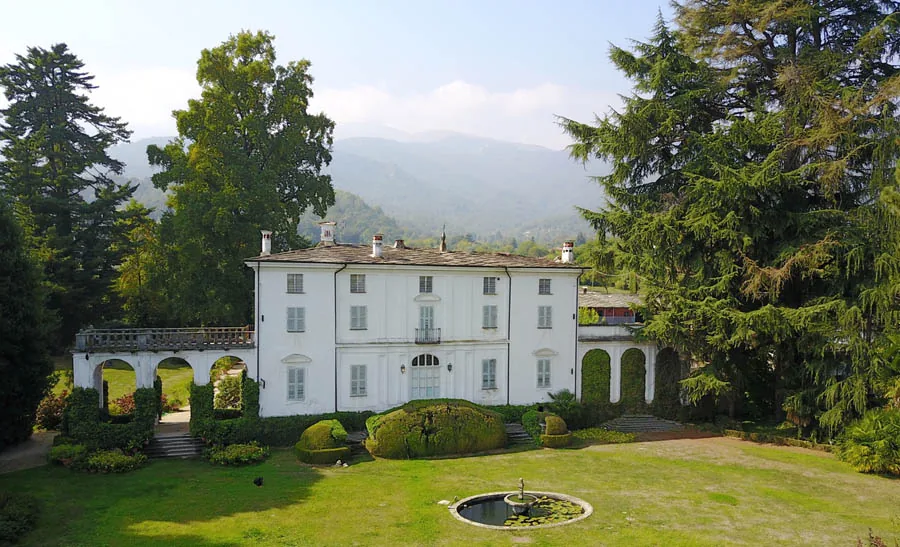
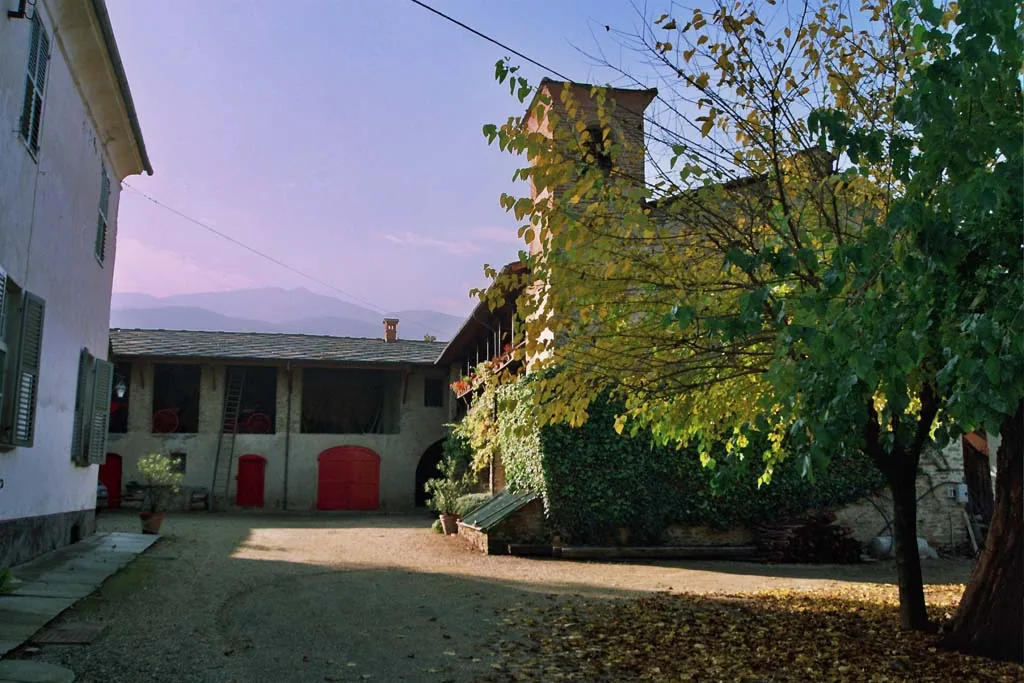
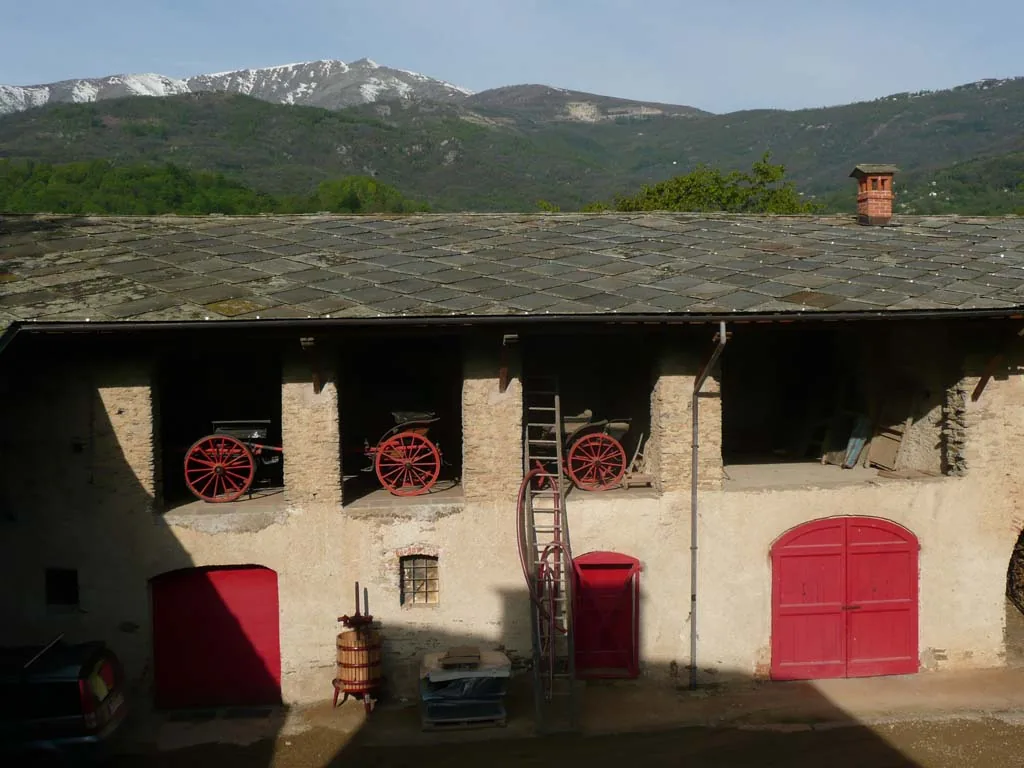
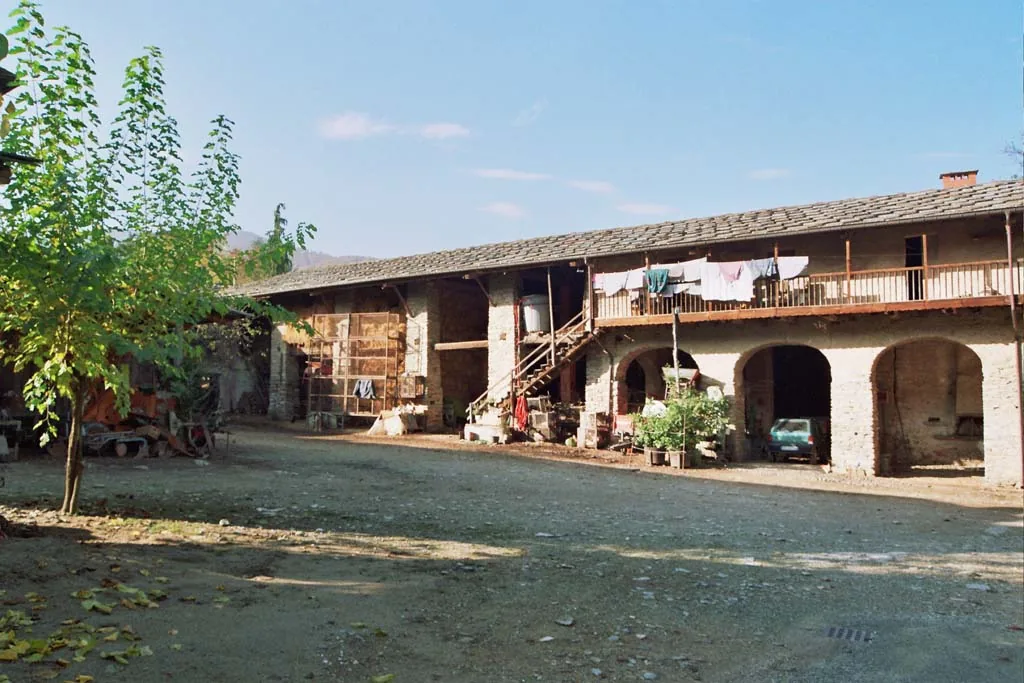
A large courtyard closes off the north side of the Palazzo, where in the Middle Ages stood the village of Bagnolo, which found protection in the shadow of the “Castello Piano” (the lowland castle), as it was then called to distinguish it from the “Castello Forte” (the fortress) at the top of the rock, where it still stands today. From 1500, after the village was rebuilt in the valley, in its present position, the castle underwent major transformations that turned it from a defensive structure into the home and residence of the Counts Malingri, and it was afterwards known as the PALAZZO.
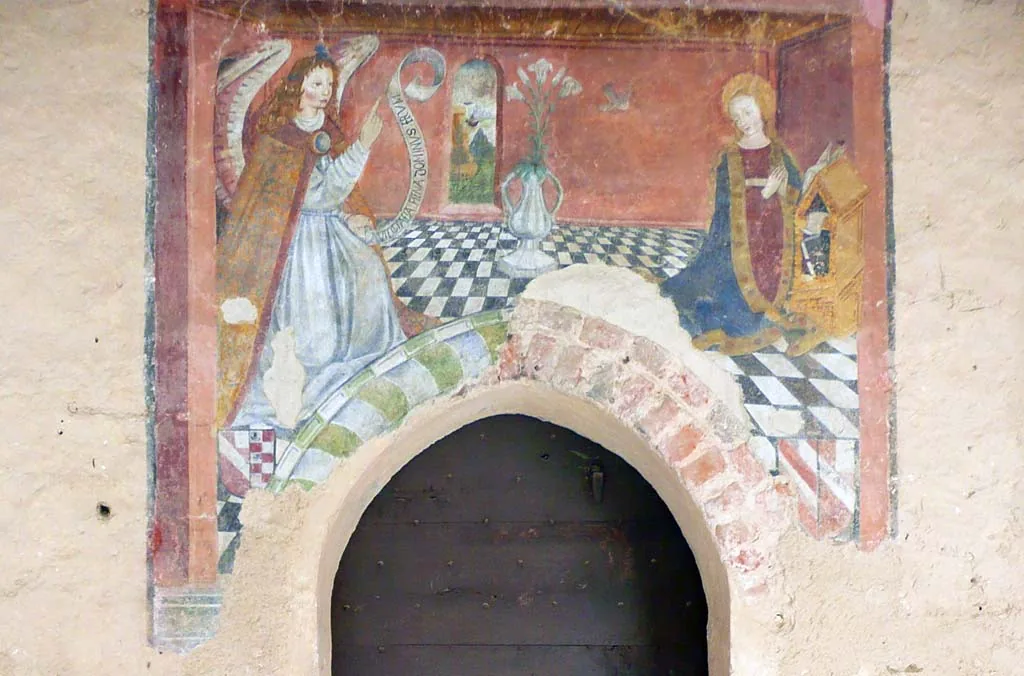
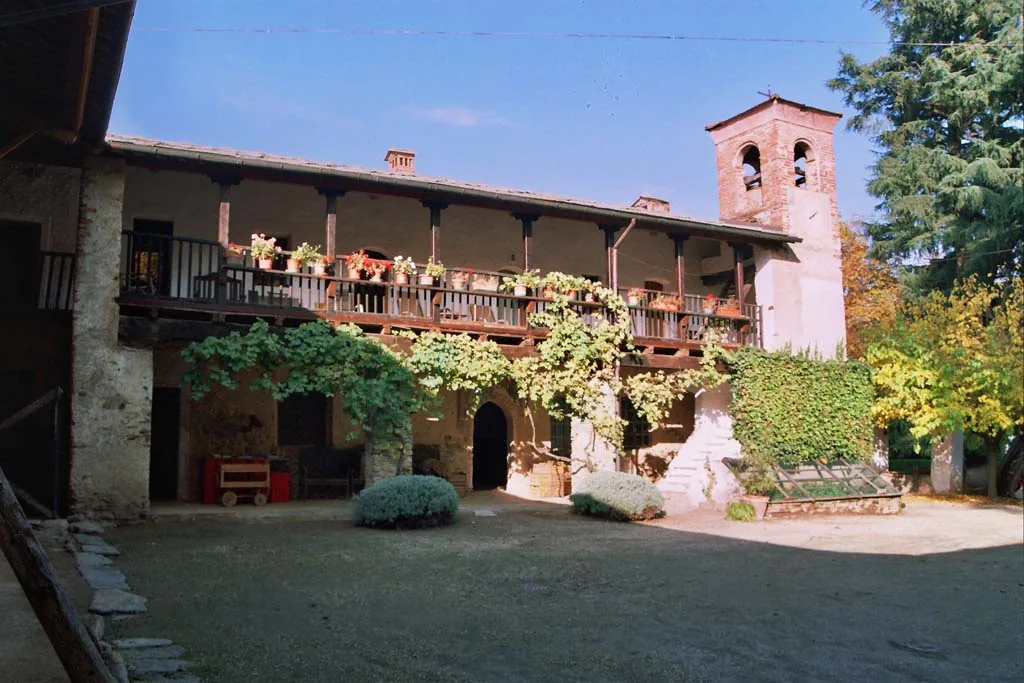
Where the village once stood, a courtyard took shape, enclosed by farm buildings, storerooms, haylofts and a stable. At its centre still stands what must have been the village church, which later became the kitchen of the Palazzo. This is attested by the beautiful fresco of the Annunciation above the Gothic doorway. La Lobbia, a hand-carved wooden loggia, overlooks the door of the Annunciation. The stables for the horses and the carriages are preserved and can be visited. Among them is an ancient farm cart, a model of those that travelled the roads in the Middle Ages, made of hand-worked wood, with the iron wheel rims made by the blacksmith of the fiefdom. The covered well, still in use, also provides cool, good water, drawn from a depth of about 30 metres.
The courtyard façade of the Palazzo is austere and simple. Above the entrance of one of the doors, a painting in imitation stone bears a lovely welcome phrase:
AN OPEN DOOR AND A GREETING HAND
placed there at the suggestion of an Irish governess of the young Counts Malingri.
PALAZZO HISTORIC PARK
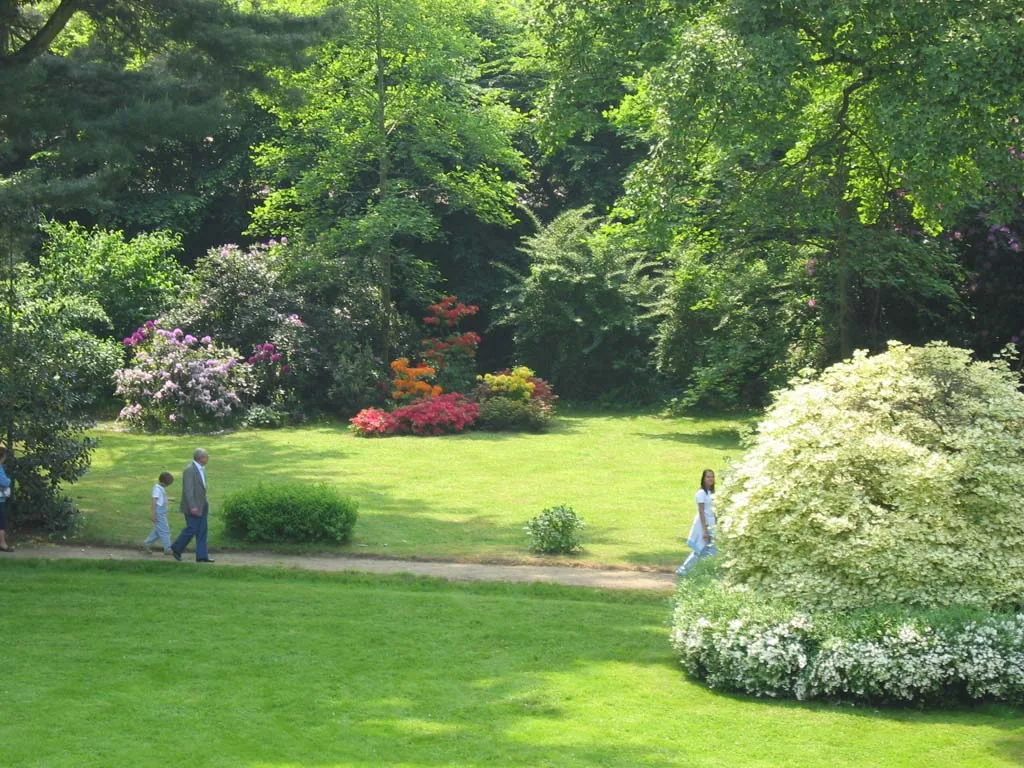
From the courtyard, a small door leads into the park, where visitors are welcomed by the imposing mass of the tulip tree, with its yellow flowers in spring (Liriodendron tulipifera). The view is often surprising for its magical play of shadows, light and colours.
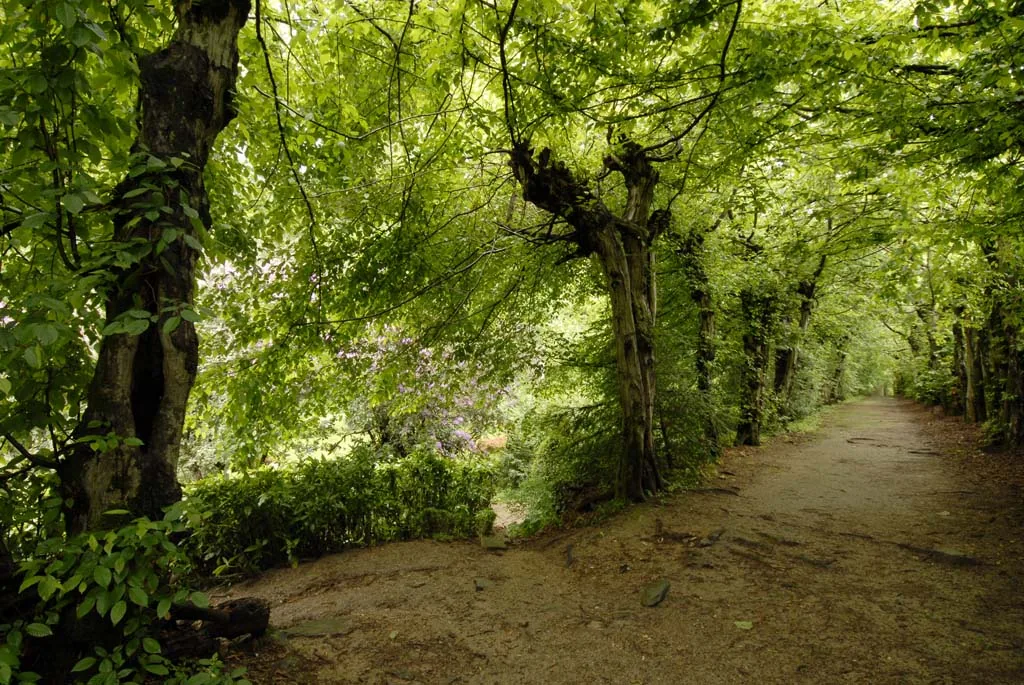
The park, laid out in the 17th century in the formal style, with green and flowering designs and geometries marked by box, hornbeam and yew hedges and by splendid hornbeam galleries, was reworked at the beginning of the 19th century according to the Romantic canons that had become fashionable in the courts of all Europe.
We recall that Coriolano Malingri di Bagnolo was an “Arcadian” poet, a worthy descendant of Aimée (1399), a poet in the Occitan language.
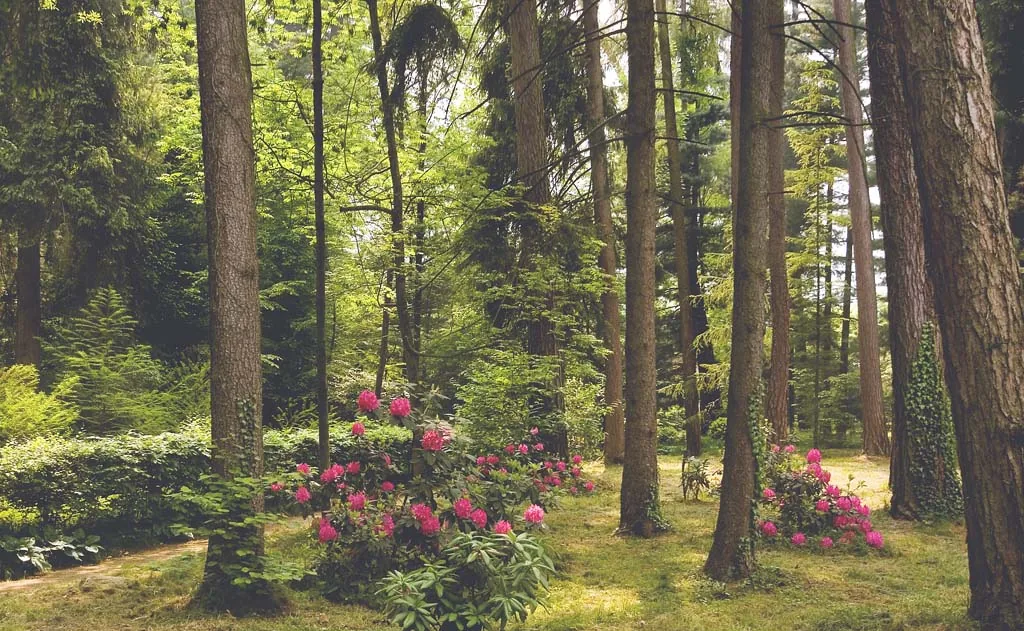
The park extends over about two hectares and is rich in particularly tall trees, between 40 and 50 metres, among which Pinus nigra, Pinus austriaca, deodar cedars, Taxus baccata, metasequoias, and then beeches of various kinds, oaks, Libocedrus, Cryptomeria japonica and others live together harmoniously.
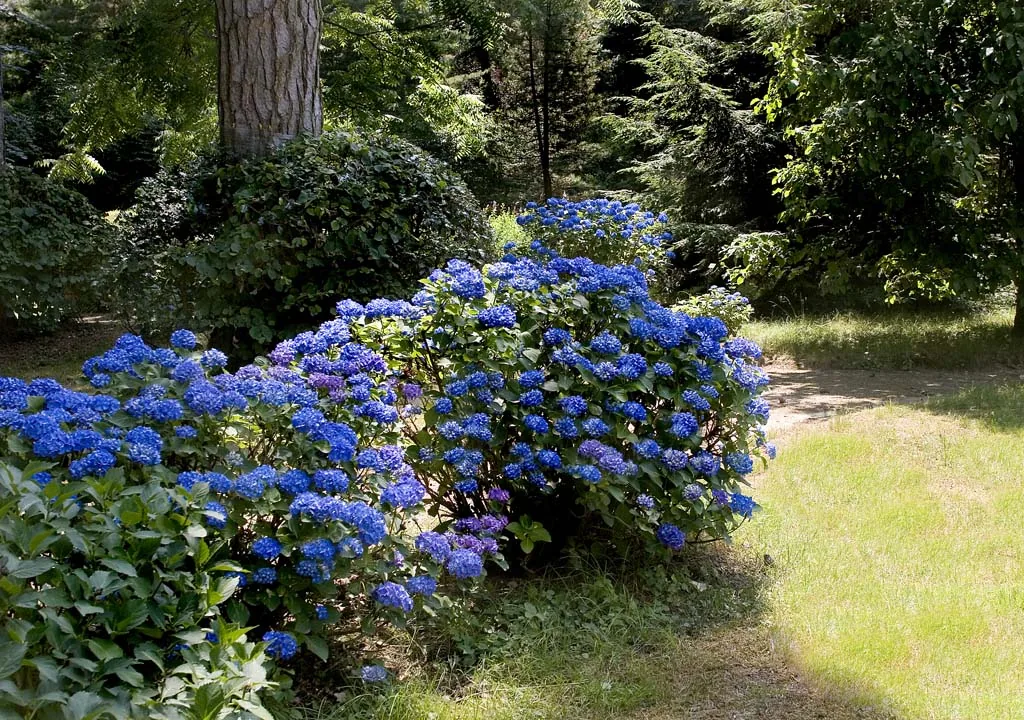
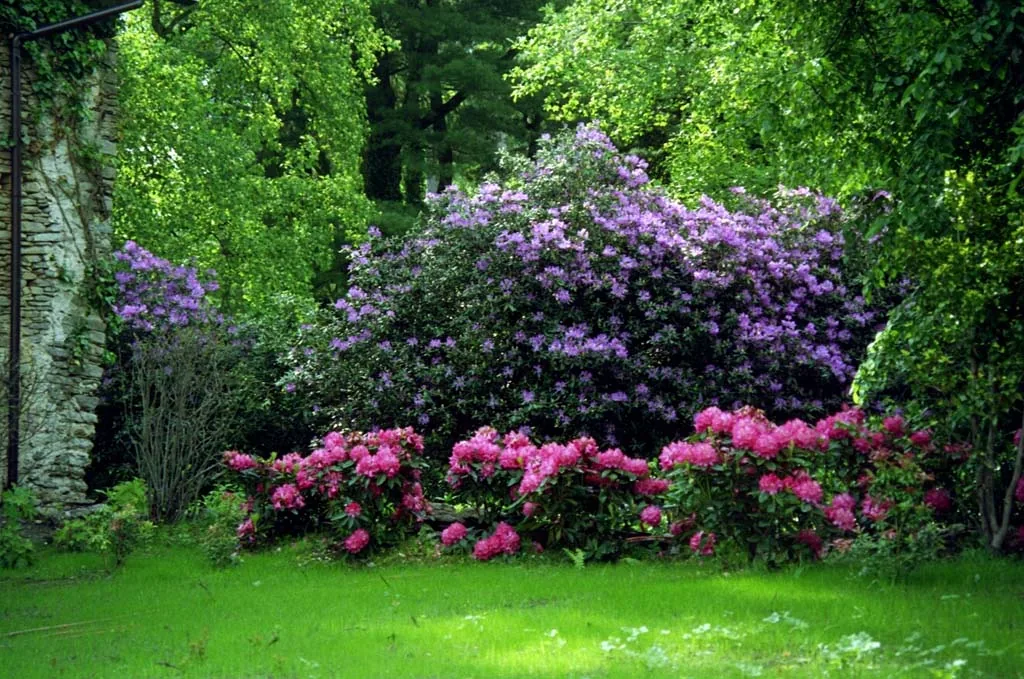
The layout of the paths runs through the whole garden, enclosed by walls, the two large lawns framed by century-old trees, conifers and broadleaves of many species, and collections of flowering shrubs such as rhododendrons, azaleas, camellias and hydrangeas, all those varieties that love very acidic soils.
In the middle of the lawn towards the valley, an elliptical stone basin called the “fontana dell’uomo verde” (the fountain of the green man), with reference to some tale of which the memory has been lost, offers shelter to small fish and newts that graze around the stems of the water lilies.
The long avenue of hornbeams forming a gallery, which comes out at the family chapel of Ognissanti (All Saints), and almost two kilometres of hedges trace the oldest design of the park, which borders on the hill of the Castello and is marked by the shady Rio Mondarello (the Mondarello stream), over which groves of bamboo bend.
The so-called “tampe dei cervi” (the deer pits), where deer were raised in the 19th century as “romantic animals”, crossed by a stone bridge, and the little tower, a characteristic circular building, part tower and part place of meditation and coolness, enliven the flat layout of the garden and make it mysterious and evocative.
The park is part of the Grandi Giardini Italiani (Great Italian Gardens) circuit.
The collection of flowering shrubs, which the owners of every generation have favoured and increased, is an interesting feature of the park, to be discovered through the seasons.
FRESCOES AND CHAPELS
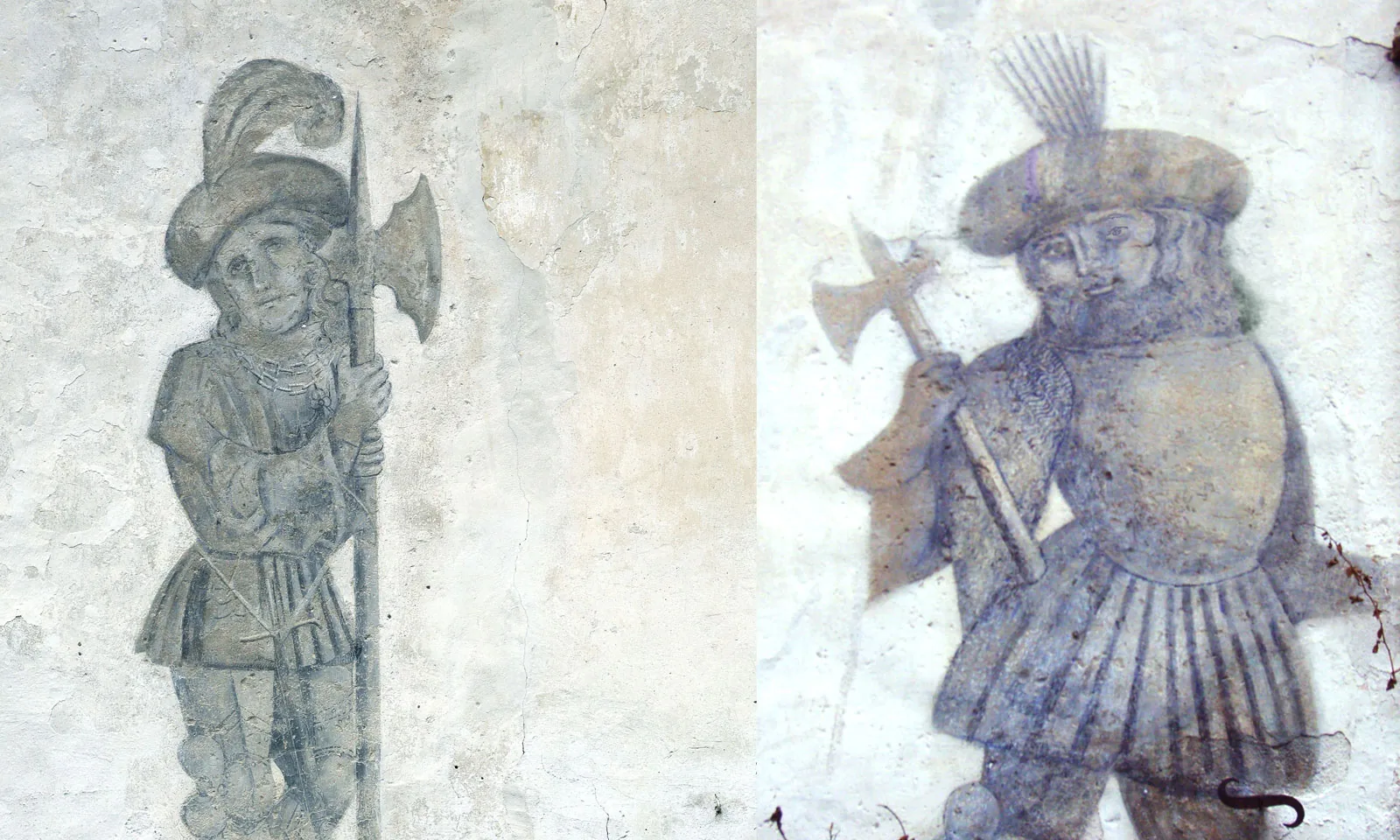
In the full Renaissance period, the Palazzo was enriched with splendid frescoes decorating the south façade. They are visible today after the restoration carried out in 1994 by Prof. Antonio Rava.
They depict warriors in parade armour, painted in the technique called “en grisaille”. The warriors stood beside the 3 large cross-mullioned terracotta windows, and 4 of them remain, partially preserved. They were called the LANZICHENECCHI (the Landsknechte), perhaps because in the 1500s the Lanzichenecchi were the best-armed and most battle-hardened mercenary troops of German origin, and were meant to frighten enemies even merely in effigy!
Also on the south façade, framed by an aedicule of a still distinctly Gothic structure, is the very sweet Madonna with Child, attributed to the painter Jacopino Longo, a pupil of Macrino d’Alba, around 1530.
A band of elegant decoration with curious medallions depicting symbolic figures marks the first floor and the second floor on the façade. The second floor no longer exists: it was perhaps demolished following some accident, fire or other cause, and disappeared in the transformation into the Palazzo.
SAN SEBASTIANO CHAPEL
The most important cycle of frescoes preserved in the territory of the fiefdom of Bagnolo is certainly the one that can be admired in the chapel of San Sebastiano, which is located in the basement beneath the façade facing the valley.
The chapel must have been a small building forming part of the ancient village of Bagnolo. It was partly demolished to build the new façade of the Palazzo in the 17th century, at the same time as the park was created.
The park, being made of fill soil laid over the pre-existing natural slope, rises two metres above the original level and therefore buries the chapel, which is partially demolished. The rear part, the apse, is preserved inside the new wing, and so remains incorporated into the Palazzo building.
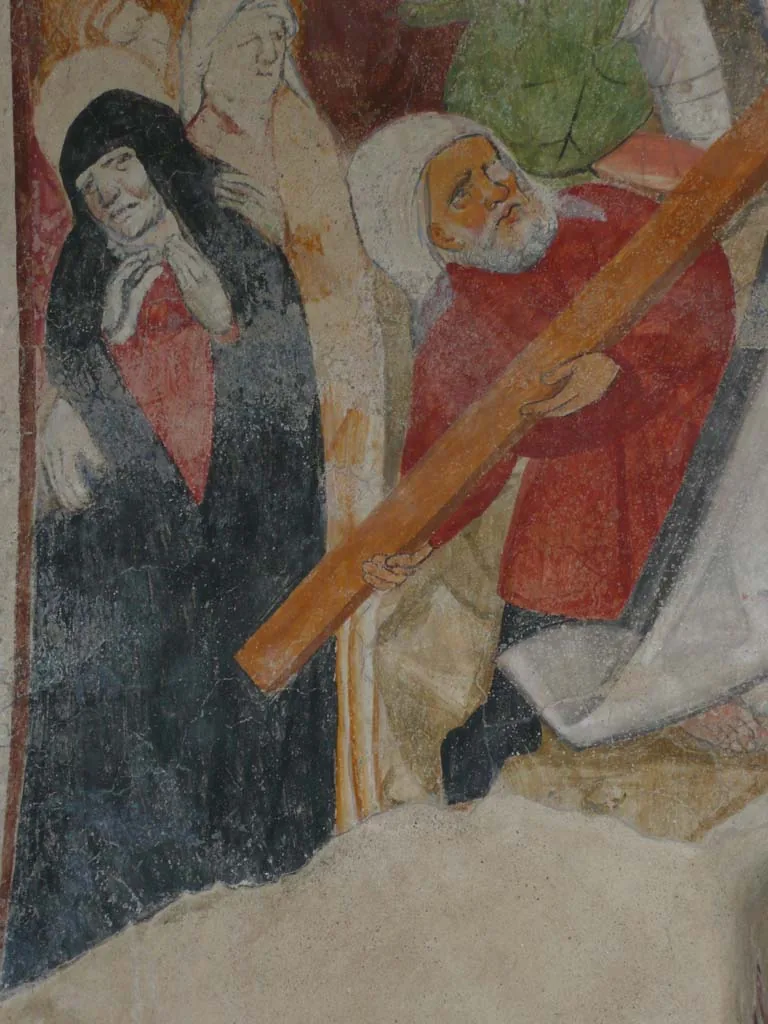
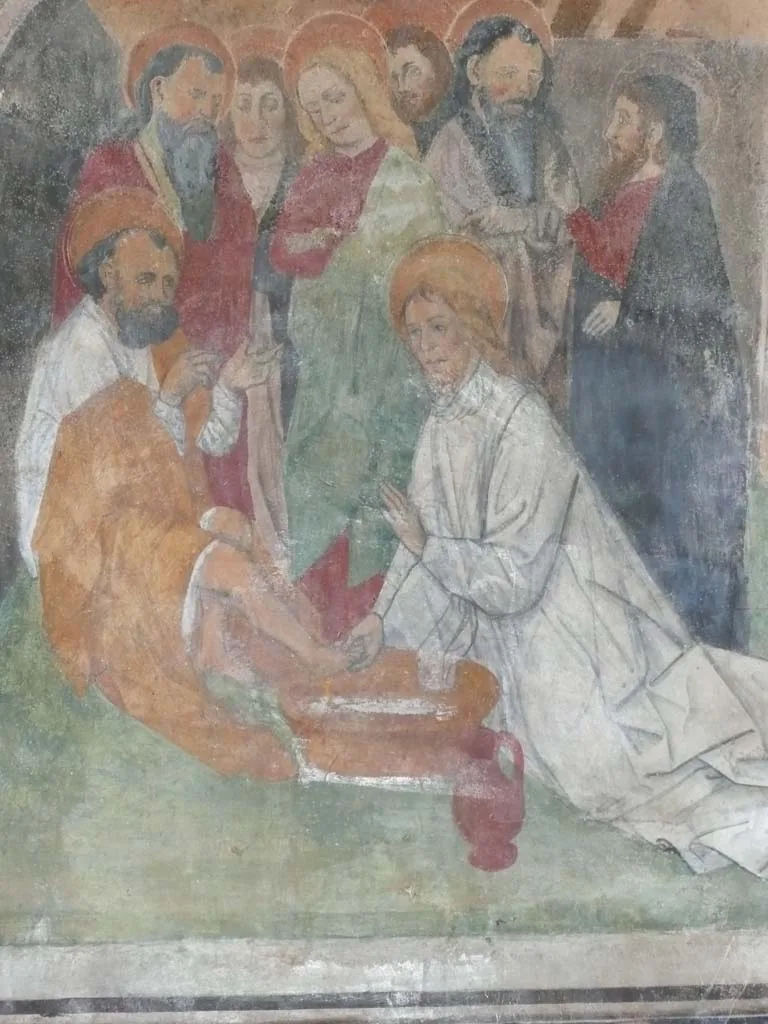
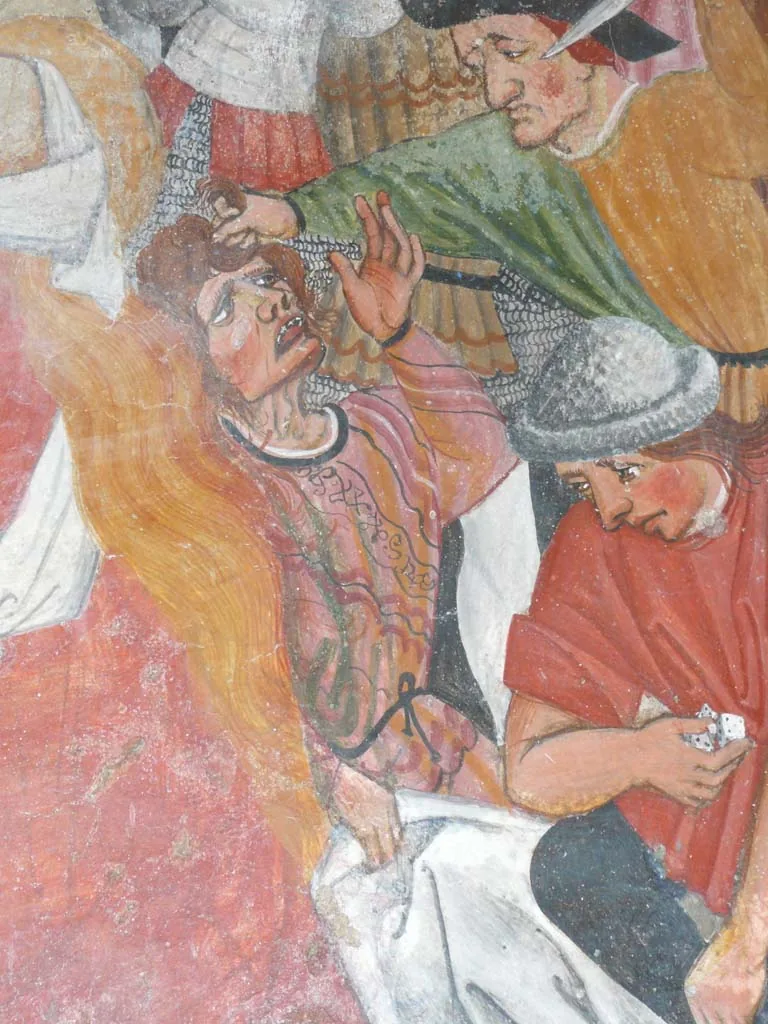
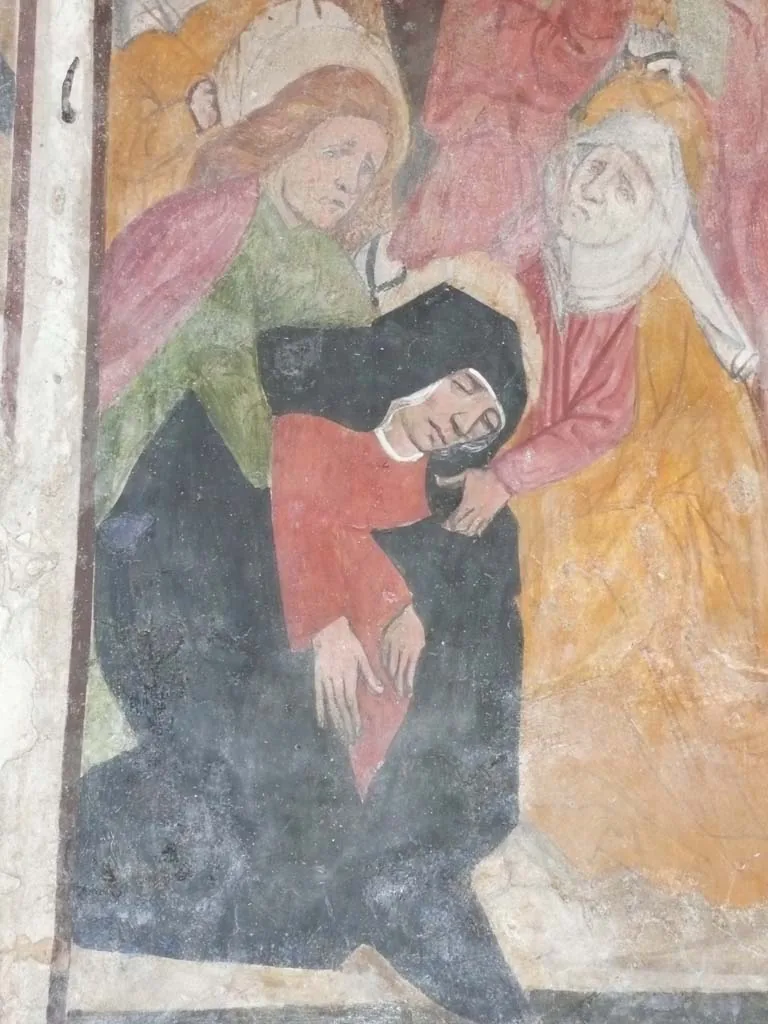
The restoration carried out in 1994 by Prof. Antonio Rava consolidated what remained of the magnificent Passion cycle, executed around the second half of the 15th century by the artist whom art historians today call “the Master of Villar”, most probably Giovanni Canavesio and his pupils.
The chapel has a rectangular plan and is covered by a pointed-arch vault.
The cycle, in 12 panels, told the PASSION OF CHRIST in a moving and striking way. The chapel was frescoed from floor to ceiling, and below the pictorial representations it bore elegant decorations with Malingri family coats of arms. One can still glimpse the red drapery edged with ermine, which indicated belonging to a noble family.
During the restoration, two intact and well-preserved depictions were brought to light, embedded in the wall of the façade: to the right of the Last Supper, and to the left of the Judgment of Pilate, a figure seen in the act of washing his hands, wearing a curious conical hat.
The scenes of the cycle visible today represent, on the left: 1) Last Supper, 2) Arrest, 3) Prayer in the Garden, 4) Washing of the Feet;
on the right: 5) Christ before Caiaphas, 6) Flagellation, 7) Pilate Washing His Hands, 8) Ascent to Calvary, 9) Crucifixion, 10) Deposition.
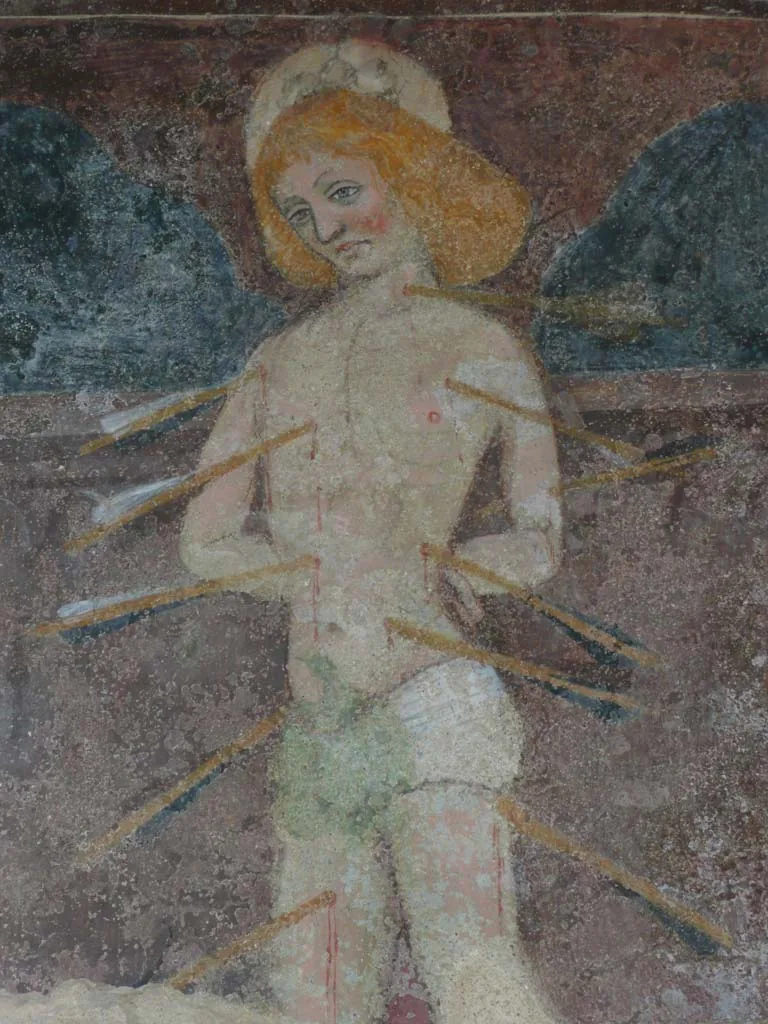
On the end wall, in the centre: San Sebastiano, to whom the chapel is dedicated, flanked by two figures without nimbus (without a halo), a man reading a book and a young man armed with a sword; on the right, San Bernardino da Siena and Santa Chiara. Above (in the lunette): in the centre, a coat of arms that is no longer legible; on the right, the remains of a probable Deposition in the Sepulchre.
Interestingly, above the armed young man, the inscription “B Berna(rdus)” may refer to Blessed Bernard of Baden, protector of Moncalieri, who died there in 1458 and was immediately venerated for his reputation for miracles by Duchess Yolande, who promoted his beatification shortly before her death (1478). The Collegiata di Santa Maria in Moncalieri preserves a small panel representing, in analogy with this fresco, the Saint as a young warrior in armour. The time of its execution should not differ much, and it gives indications for the dating of the frescoes (1570).